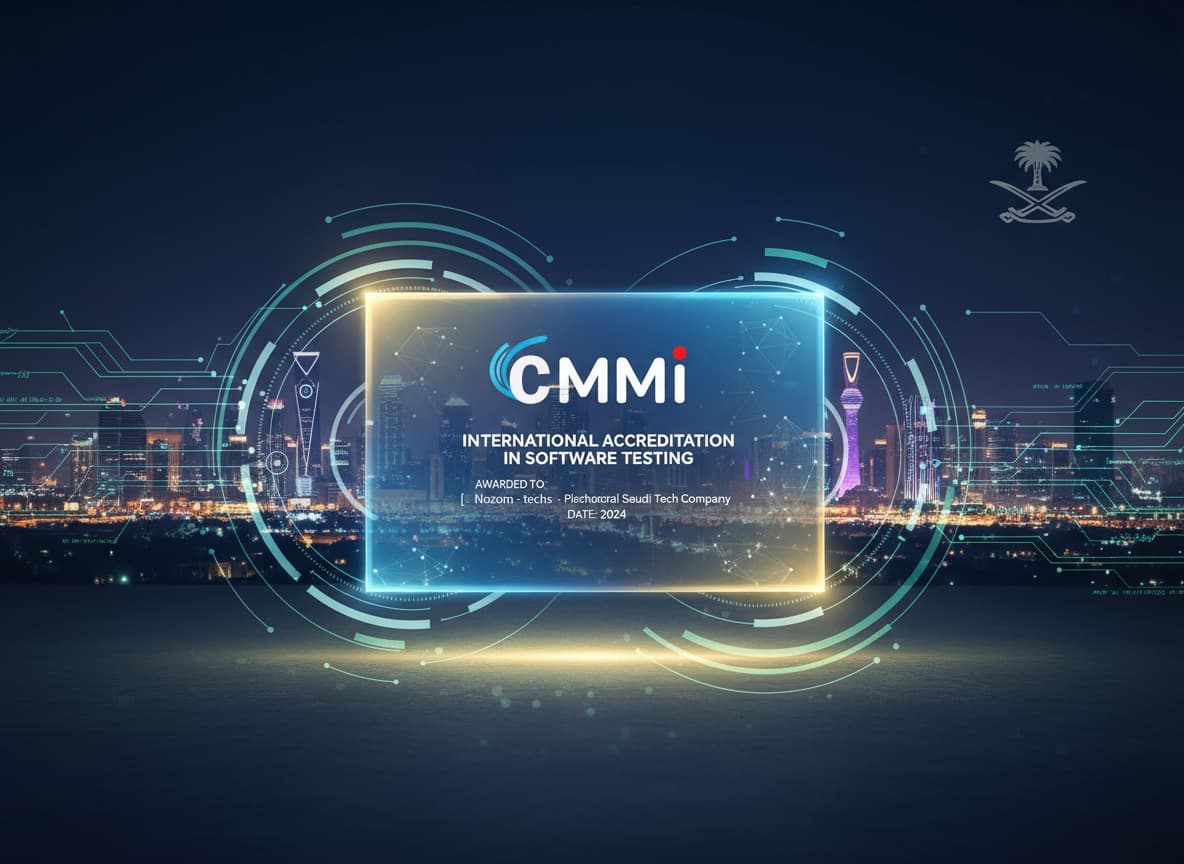
CMMI vs TMMi: Key Frameworks for Process Quality
Explore the difference between CMMI and TMMi frameworks and how each improves process quality, performance, and continuous organizational improvement.
CMMI vs TMMi: Key Frameworks for Process Quality
As Saudi organizations accelerate digital transformation under Saudi Vision 2030, achieving operational excellence and regulatory compliance is no longer optional.
Frameworks like CMMI (Capability Maturity Model Integration) and TMMI (Test Maturity Model Integration) provide a structured, measurable approach to:
- Enhance process maturity and governance
- Reduce operational and delivery risks
- Align with national regulators such as the National Cybersecurity Authority (NCA), Saudi Data and AI Authority (SDAIA), and Digital Government Authority (DGA)
- Improve software quality and time-to-market
With proven experience supporting government and enterprise entities — and being recognized as Best IT Partner 2025 by SIDF — Nozom Techs enables organizations to operationalize these frameworks through consulting and its Daaem platform.
Introduction: Why Process Maturity Matters in KSA
In today's highly competitive and regulated Saudi market, organizations face increasing pressure to:
- Deliver high-quality digital services
- Ensure compliance with cybersecurity and data regulations
- Optimize operational efficiency at scale
However, many organizations still operate with:
- Fragmented processes
- Limited performance visibility
- Reactive risk management
This is where process maturity frameworks like CMMI vs TMMi become critical enablers of sustainable growth.
What is CMMI? (Capability Maturity Model Integration)
CMMI is a globally recognized framework designed to improve organizational performance, governance, and process efficiency across all departments.
CMMI Maturity Levels
- Level 1 – Initial — Processes are ad hoc and unpredictable
- Level 2 – Managed — Processes are documented and managed at the project level
- Level 3 – Defined — Standardized processes across the organization
- Level 4 – Quantitatively Managed — Data-driven performance measurement and control
- Level 5 – Optimizing — Continuous improvement through innovation and analytics
Business Impact in Saudi Arabia
- Strengthens enterprise governance and GRC frameworks
- Supports compliance with NCA cybersecurity controls
- Enables scalable digital transformation initiatives
? Through CMMI consulting services, Nozom helps organizations accelerate maturity adoption while aligning with national regulatory frameworks.
What is TMMI? (Test Maturity Model Integration)
TMMI is a specialized framework focused on enhancing software testing processes and quality assurance capabilities. It complements CMMI by ensuring that software quality is embedded throughout the development lifecycle.
TMMI Maturity Levels
- Level 1 – Initial — Unstructured and inconsistent testing
- Level 2 – Managed — Defined testing policies and documentation
- Level 3 – Defined — Organization-wide standardized testing methodologies
- Level 4 – Measured — KPI-driven test performance monitoring
- Level 5 – Optimization — Continuous test improvement using analytics and automation
Why TMMI Matters
- Reduces defect leakage into production
- Improves release reliability and user experience
- Lowers long-term software maintenance costs
? With Daaem, Nozom enables organizations to automate testing governance, metrics tracking, and continuous improvement cycles.
CMMI vs TMMI: Key Differences
| Aspect | CMMI | TMMI |
|---|---|---|
| Scope | Organization-wide processes | Software testing processes |
| Objective | Improve performance & efficiency | Ensure software quality & reduce defects |
| Target Users | All departments | QA & development teams |
| Role | Foundational framework | Specialized complementary model |
Why Saudi Organizations Need CMMI vs TMMi
1. Operational Excellence
- Streamlined processes
- Reduced inefficiencies
- Faster project delivery
2. Risk & Compliance Management
- Alignment with NCA, SDAIA, and DGA frameworks
- Stronger GRC posture
- Proactive risk mitigation
3. Enhanced Customer Experience
- Higher quality products
- Reliable service delivery
- Increased trust and satisfaction
4. Innovation Enablement
- Data-driven decision-making
- Faster adoption of AI and automation
- Improved time-to-market
How Nozom Techs Enables Success
With deep expertise across Saudi government and enterprise sectors, Nozom delivers a holistic implementation approach:
- Gap Assessment & Maturity Evaluation
- Process Design & Optimization
- GRC Alignment with Saudi Regulations
- Tooling & Automation via Daaem Platform
- Training & Change Management
The focus is not just certification — but measurable, sustainable performance improvement.
A Strategic Move for Decision Makers
For CIOs, CTOs, GRC leaders, and digital transformation executives, adopting CMMI vs TMMi means:
- Reduced operational and delivery risks
- Improved service quality and consistency
- Stronger regulatory compliance
- Accelerated digital transformation
Get Started with Nozom
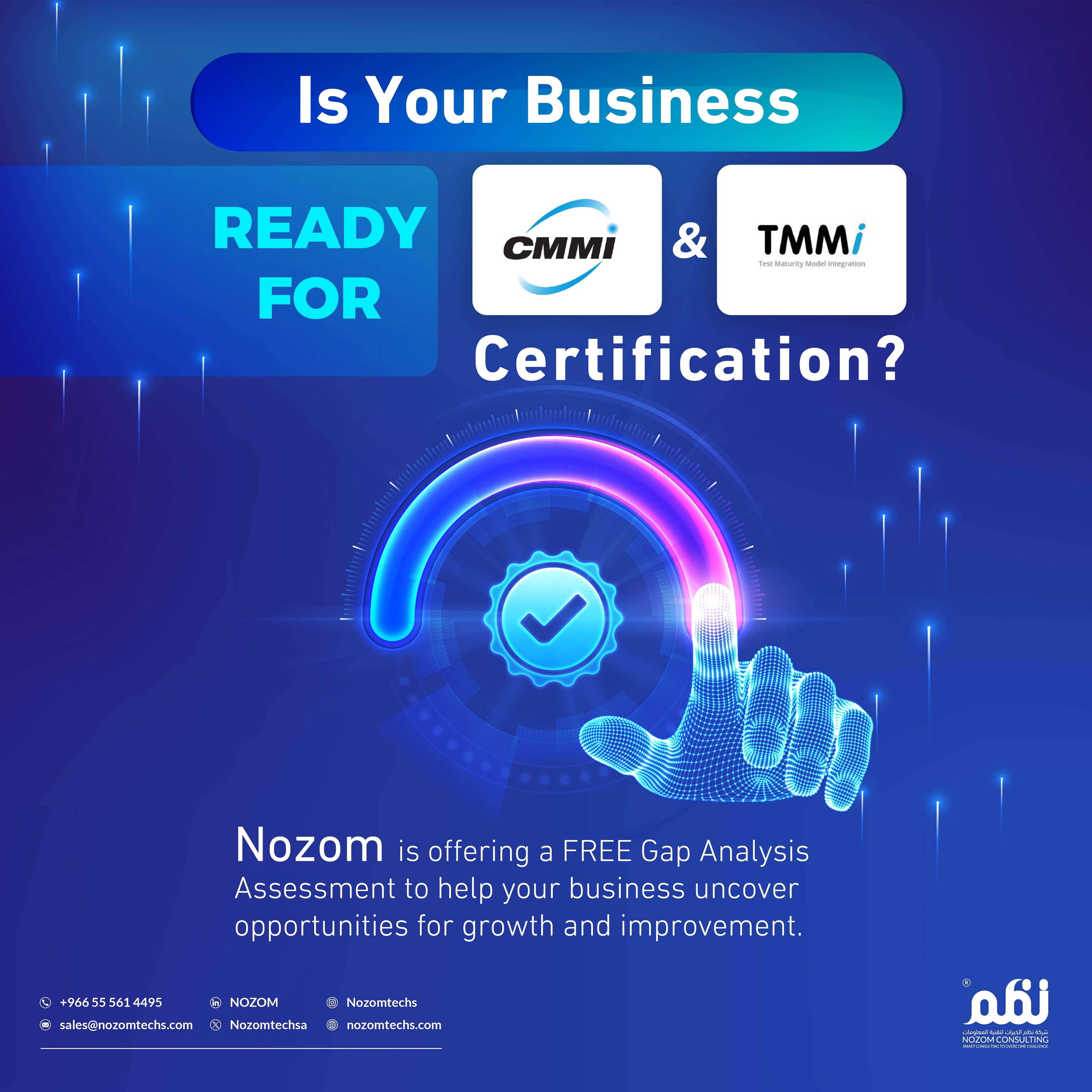
Ready to elevate your organization's process maturity?
? Request your Free Maturity Assessment today
- ? sales@nozomtechs.com
- ? 0555614495