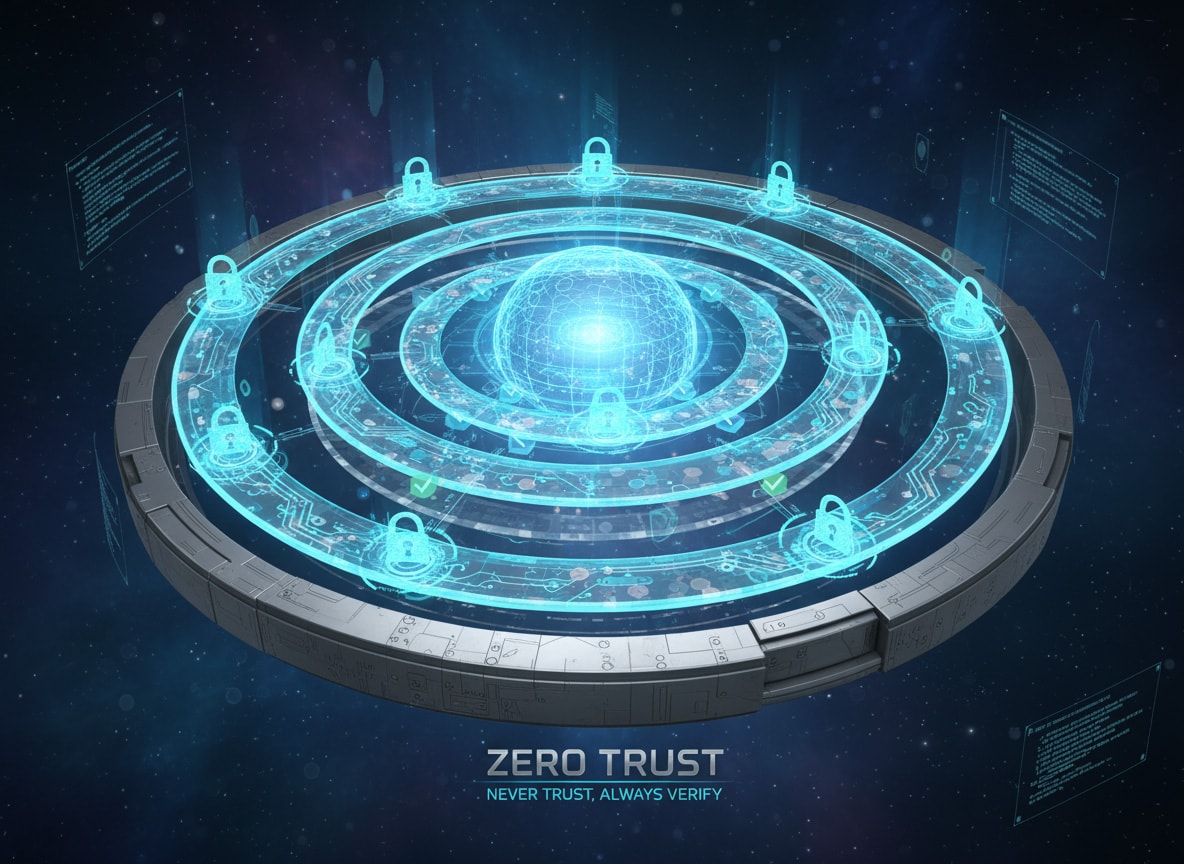
Zero Trust Strategy: Is Your Security Truly Trustworthy?
Evaluate your Zero Trust Strategy and learn how to strengthen cybersecurity, reduce risks, and protect enterprise systems from modern threats.
Is Your Zero Trust Strategy Actually Trustworthy?
Zero Trust has become the gold standard in cybersecurity. But implementing Zero Trust is far more complex than deploying a few tools. Many organizations believe they have Zero Trust when they've only scratched the surface.
What Zero Trust Really Means
Zero Trust is a security model based on the principle: "Never trust, always verify."
Key principles include:
- Verify explicitly - Always authenticate and authorize based on all available data points
- Use least privilege access - Limit user access with just-in-time and just-enough-access
- Assume breach - Minimize blast radius and segment access
Common Zero Trust Mistakes
1. Tool-Centric Approach
Buying Zero Trust products without changing underlying security architecture and practices.
2. Incomplete Implementation
Applying Zero Trust Strategy to some resources but not others, creating security gaps.
3. Lack of Identity Management
Weak identity and access management undermines the entire Zero Trust model.
4. Static Policies
Setting policies once without continuous adaptation based on risk signals.
5. Poor User Experience
Overly restrictive implementations that frustrate users and reduce productivity.
6. Insufficient Monitoring
Not collecting and analyzing the data needed to detect anomalies and threats.
Building a Trustworthy Zero Trust Architecture
Phase 1: Assess and Plan
- Inventory all users, devices, applications, and data
- Map data flows and access patterns
- Identify critical assets and risk levels
- Define Zero Trust Strategy maturity goals
Phase 2: Identity Foundation
- Implement strong identity and access management (IAM)
- Deploy multi-factor authentication (MFA) everywhere
- Establish privileged access management (PAM)
- Integrate identity sources
Phase 3: Device Security
- Implement endpoint detection and response (EDR)
- Enforce device health checks
- Manage mobile devices
- Control unmanaged devices
Phase 4: Network Segmentation
- Implement micro-segmentation
- Deploy software-defined perimeter (SDP)
- Control east-west traffic
- Encrypt all network traffic
Phase 5: Application Security
- Implement secure access service edge (SASE)
- Deploy cloud access security brokers (CASB)
- Enforce application-level controls
- Monitor application behavior
Phase 6: Data Protection
- Classify and label data
- Implement data loss prevention (DLP)
- Encrypt data at rest and in transit
- Control data access and usage
Phase 7: Visibility and Analytics
- Deploy security information and event management (SIEM)
- Implement user and entity behavior analytics (UEBA)
- Correlate signals across domains
- Enable automated response
Phase 8: Continuous Improvement
- Monitor Zero Trust maturity
- Adapt policies based on threat intelligence
- Conduct regular assessments
- Update as technology and threats evolve
Measuring Zero Trust Strategy Success
Key metrics to track:
- Authentication success/failure rates
- Access request patterns
- Policy violations
- Incident response times
- User friction (help desk tickets, login issues)
- Coverage (% of resources under Zero Trust)
The Cultural Shift
Zero Trust Strategy requires organizational change:
- Security becomes everyone's responsibility
- Transparent communication about security posture
- Collaboration between security and business units
- Continuous learning and adaptation
Overcoming Resistance
Common objections and how to address them:
"It's too complex" Start small, build incrementally, show early wins.
"It will hurt productivity" Prioritize user experience in design, use modern authentication methods.
"It's too expensive" Calculate the cost of a breach vs. prevention, phase investments over time.
"We already have security tools" Zero Trust Strategy is about architecture and process, not just tools.
The Nozom Zero Trust Framework
At Nozom, we've developed a comprehensive Zero Trust framework that:
- Assesses your current security posture and Zero Trust maturity
- Designs a customized Zero Trust architecture aligned with your business
- Implements Zero Trust Strategy controls in a phased, risk-based approach
- Integrates with existing security investments
- Operates through managed security services
- Evolves continuously based on threats and business changes
Don't settle for false confidence. Build a Zero Trust architecture that's truly trustworthy.
Contact us to start your Zero Trust Strategy journey.